
Facial Palsy
Facial palsy or facial weakness occurs as a result of damage to the facial nerve. This nerve controls the muscles of the face responsible for our facial expression e.g. smile, pout, frown, and wink. This maybe due to:
- Virus – This attacks the facial nerve causing nerve degeneration. The most common conditions include Bells Palsy or Ramsay Hunt Syndrome.
- Trauma – A cut to the facial nerve (e.g. a sharp instrument) may partially or fully sever the nerve.
- Disease – Tumours that lie close to the facial nerve (e.g. acoustic neuroma, parotid tumour) may require surgical intervention. There is risk that the facial nerve maybe traumatised during such a procedure.
Can Physiotherapy Help?
Physiotherapy plays a key role in the management of facial palsy. The first step is to seek an assessment carried out by a Chartered Physiotherapist specialising in facial rehabilitation, experienced in assessing the extent of presenting problems and the ability to manage the condition through the various stages of recovery. This will ensure that you recovery to the best of your ability.
What are the symptoms of Facial Palsy?
Frequent problems commonly seen in facial palsy are:
- Weakness of Muscles of facial expression e.g. smile, surprise, eye closure
- Over activity of the unaffected side.
- Synkinesis (mass movements)
- Muscle tightness
- Facial asymmetry
- Eye dryness and lack of eye closure
- Muscle sensitivity
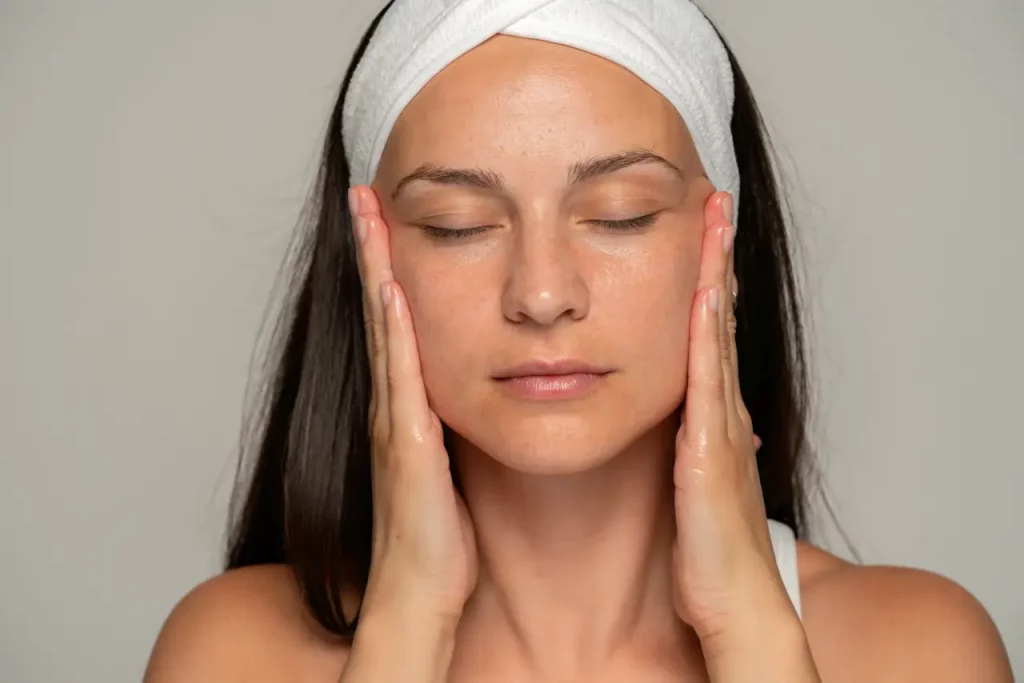
What does facial Physiotherapy involve?
Physiotherapy management varies depending on the severity of symptoms and the stage of recovery of the facial nerve. Management in the early “paresis” phase differs to treatment in the movement phase to the synkinesis phase.
To facilitate recovery we will use a range of skills including;
- Tissue mobilisation techniques
- Neuromuscular retraining
- Oral and eye care
- Relaxation techniques
- Taping
Response to treatment will depend on a number of factors including the extent of nerve damage, the stage of recovery, presence of secondary complications synkinesis, muscle tightness, spasms and the potential for further recovery.
What is Synkinesis?
Synkinesis is mass movement of the facial muscles. For example when attempting to smile the eye may narrow or when closing the eye the mouth pulls up. It will develop where there is persistent facial impairment and can vary from being subtle to quite marked. The muscles are often working to hard, they are tight and sensitive to touch and unfortunately can interfere with natural facial expression. Physiotherapy intervention can specifically address this distressing symptom. Of importance is to identify the symptom early, address it and monitor closely.
Facial Clinic
We run a Facial Rehabilitation Clinic providing highly skilled assessment, treatment and monitoring through the various stages of recovery. We combine an array of skills to facilitate muscle activity and recovery. Facial disfigurement is not something to be left to chance. Skilled management significantly improves the quality of recovery.
JOIN OUR MAILING LIST
EMAIL: